Why Your Skin Needs Something Different After Dark
Most people treat moisturizer as one step: one jar, morning and night, done. That works for some skin. But as skin ages, the job a cream does at 7 a.m. and the job it can do at 11 p.m. start to look very different. Daytime skin is defending itself against sun, pollution, and dry air. Nighttime skin is recovering, and it is losing more water while it does.
That difference is the whole case for a night cream. This guide explains what separates a night cream from a daily moisturizer, why overnight repair formulas are built the way they are, and how to choose the right pairing for your skin, from classic retinoid night creams to newer formulas like Hydrinity Célthera that combine barrier repair with cellular energy support.
What Is the Difference Between a Night Cream and a Moisturizer?
A daytime moisturizer is designed to hydrate, sit comfortably under sunscreen and makeup, and help protect skin through the day. It is usually lighter, absorbs quickly, and often carries antioxidants to help defend against environmental stress.
A night cream is designed for the hours when nothing else is going on your skin. Without sunscreen, makeup, or daylight to work around, a night formula can be richer, carry more barrier lipids, and include actives that are better used in the evening, such as retinoids and exfoliating acids that can make skin more sensitive to the sun. The best overnight formulas do two things at once: they replace the moisture skin loses overnight and they support the renewal work skin is already doing.
In short: a moisturizer protects and hydrates, while a night cream hydrates and helps repair.
Why Skin Behaves Differently Overnight
Skin follows a daily rhythm. Research on the skin's circadian cycle suggests that barrier water loss tends to rise in the evening and overnight, while cell renewal activity is higher during the night than during the day. Daytime is when skin is mostly in defense mode, handling UV and oxidative stress. Nighttime is when it shifts toward recovery.
Two practical things follow from that. First, skin can dry out more while you sleep, which is why a thin daytime lotion often is not enough by morning, especially in cooler months. Second, the evening is the natural window for ingredients that support renewal, because they are not competing with sun exposure and you can give them hours of uninterrupted contact time.
Aging adds a third factor. Mature skin tends to produce fewer barrier lipids and holds water less efficiently, so the overnight moisture loss hits harder. An overnight repair formula is built to answer all three.
Night Cream vs Moisturizer at a Glance
| Feature | Daytime Moisturizer | Night Cream / Overnight Repair |
|---|---|---|
| Main job | Hydrate and protect | Replenish and support renewal |
| Texture | Lighter, fast-absorbing, layers under SPF and makeup | Often richer, with more barrier lipids and emollients |
| Typical actives | Antioxidants such as vitamin C, hyaluronic acid, peptides | Retinoids, AHAs, ceramides, cholesterol, signaling peptides, cellular energy support |
| Sun considerations | Worn under broad-spectrum sunscreen | Can include ingredients that increase sun sensitivity, so daily SPF matters |
| Best for | Every skin type, every morning | Aging, dry, or barrier-depleted skin, and anyone using evening actives |
| Examples we carry | Young Goose Youth Daily, Hydrinity HYDRI-C | Hydrinity Célthera, SkinBetter AlphaRet Overnight Cream |
What Makes a Night Cream an Overnight Repair Formula
Not every cream labeled "night" does more than a moisturizer. The formulas worth using at night tend to be built around one or more of these ingredient strategies.
Renewal Actives: Retinoids and Gentle Acids
Retinoids are the most studied ingredients for visible aging, helping improve the look of fine lines, texture, and uneven tone over time. Because they can increase sun sensitivity and some people find them drying, they belong in the evening. Several night creams build a retinoid directly into a moisturizing base, so you get renewal and hydration in one step.
SkinBetter AlphaRet Overnight Cream pairs a retinoid with lactic acid in the brand's AlphaRet technology, along with glycolic acid, peptides, ceramides, squalane, and hyaluronic acid. For skin that already tolerates retinoids well and wants a stronger step, SkinBetter Intensive AlphaRet Overnight Cream uses the same approach in a richer texture. Revision Skincare D·E·J Night Face Cream takes a different route, combining time-released 0.25% retinol with bakuchiol, peptides, ceramides, and cholesterol to target the dermal-epidermal junction, the layer where visible firmness starts to change with age.
If you are new to retinoids, start a few nights a week and build up. Our guide on how often to use retinal walks through a sensible schedule. Retinoid and AHA night creams call for broad-spectrum sunscreen every morning, and anyone pregnant, nursing, or planning a pregnancy should check with a physician before using retinoids.
Barrier Lipids and Humectants
The skin barrier is held together by a lipid mix of ceramides, cholesterol, and fatty acids. As levels decline with age, skin loses water more easily, and nighttime is when that loss peaks. A true overnight formula replaces those lipids rather than just coating the surface. Look for multiple ceramides alongside cholesterol, plus humectants such as hyaluronic acid, glycerin, and urea that pull water into the skin and help hold it there.
Signaling Peptides and Cellular Energy Support
The newest generation of night creams goes a step further, pairing barrier repair with ingredients that support the skin's own renewal processes. Peptides act as messengers that encourage the look of firmer, smoother skin, and cellular energy ingredients support the NAD+ pathways cells rely on for repair. If that idea is new to you, our guide to NAD+ skincare and cellular energy covers the science.
The New Generation of Overnight Repair
Hydrinity Célthera Advanced Overnight Repair Cream is a good example of where night creams are heading. Rather than relying on one hero active, it layers several strategies into a single nighttime step:
- Peptide signaling: Hydrinity's ExoEGF™ technology uses biomimetic exosome delivery for Oligopeptide-1, a vegan epidermal growth factor, to support firmer, smoother-looking skin.
- Cellular energy support: NAD+ Boost Technology, built around sunflower sprout extract, supports the skin's natural NAD+ pathways.
- Barrier replenishment: four ceramides (NP, NS, EOP, and AP) with cholesterol and phosphatidylcholine, plus squalane and niacinamide.
- Deep hydration: hyaluronic acid, glycerin, urea, and ectoin to help skin hold on to water through the night.
Hydrinity reports a multi-center, randomized study of 60 women ages 25 to 65 using PRELUDE Facial Treatment Cleanser followed by Célthera nightly. After three weeks, the brand reported a 212% improvement in overall hydration and 78% softer skin. Individual results vary, but the design is the point: moisture, barrier lipids, and renewal support in one step, suitable for all skin types including sensitive skin. Apply one to two pumps to the face, neck, and décolleté as the last step of your evening routine.
Do You Need Both? Building a Day and Night Routine
For aging skin, the most effective setup is usually a lighter, protective moisturizer in the morning and a dedicated repair formula at night. Here is how that looks in practice.
Morning: Hydrate, Protect, Then SPF
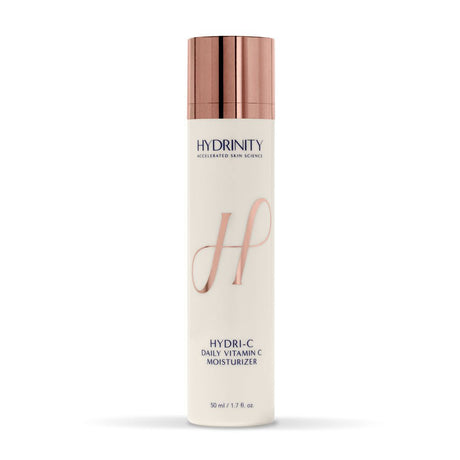
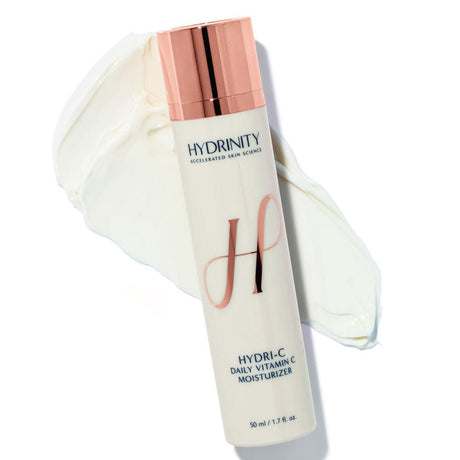
Your morning moisturizer should feel comfortable under sunscreen and support skin through the day. Young Goose Youth Daily combines encapsulated NMN with spermidine, peptides, and vitamin C in a rich but fast-absorbing texture. Hydrinity HYDRI-C Daily Vitamin C Moisturizer is a lightweight option built around stabilized vitamin C and hyaluronic acid that layers well under makeup. For a firming daily cream, Revision Skincare D·E·J Face Cream is the daytime partner to D·E·J Night, and oily or combination skin will appreciate the oil-free finish of Alastin Ultra Light Moisturizer. Finish with broad-spectrum sunscreen every day.
Evening: Cleanse, Treat, Seal
A simple evening routine has three steps. Start with a gentle cleanser such as Hydrinity Prelude Facial Treatment Cleanser, which removes sunscreen and makeup without stripping. Next, apply any treatment serum. Hydrinity RetaXome Daily Retinal Hydrator is designed for nightly use from day one, and it pairs naturally with Célthera, which Hydrinity notes can complement a retinoid routine. For more options, browse our picks for the best anti-aging serums. Then seal everything in with your night cream.
One rule: choose one main retinoid per night. If your night cream already contains a retinoid, such as AlphaRet or D·E·J Night, skip a separate retinoid serum on the same evening, and pair it instead with a barrier-focused cream on alternate nights if your skin feels dry.
When a Moisturizer Can Pull Double Duty
Not everyone needs two separate creams. Some moisturizers are formulated for both morning and evening use and are rich enough to work at night, especially for younger or less dry skin. Young Goose C.A.R.E. is a lightweight mitochondrial moisturizer with NAD+ APEX™, methylene blue, creatine, and copper tripeptide-1, designed for both routines. SkinBetter Trio Luxe Moisture Treatment is lipid-rich with ceramides and cholesterol, a strong fit for dry or mature skin and for anyone using retinoids. NeoGenesis Barrier Renewal Cream is a gentle, barrier-first choice for sensitive or post-treatment skin. You can compare more options in our full moisturizer collection.
How to Choose Based on Your Skin
- Dry or mature skin: a dedicated night cream with ceramides and cholesterol, such as Célthera or Trio Luxe, makes the biggest difference.
- Fine lines and texture as the main concern: a retinoid night cream such as AlphaRet Overnight Cream or D·E·J Night, introduced gradually.
- Sensitive skin: a barrier-focused formula without a retinoid, such as Célthera or NeoGenesis Barrier Renewal Cream, and patch test anything new.
- Oily or combination skin: a lighter moisturizer that works morning and night, such as Alastin Ultra Light or Young Goose C.A.R.E., may be all you need.
- Using retinoids or acids already: pair them with a lipid-rich cream to offset dryness. Our guide on how to repair your skin barrier explains why this matters.
Beyond the Face: Eyes, Neck, and Body
The same logic applies to other areas that age visibly. The skin around the eyes is thinner and often too delicate for a face-strength retinoid, which is why eye-specific formulas exist. SkinBetter EyeMax AlphaRet Overnight Cream brings retinoid and AHA renewal to the under-eye area and orbital bone in the evening. The neck and chest are easy to forget, and Célthera is designed to be applied over the neck and décolleté along with the face. For arms, legs, and other rough or crepey areas, SkinBetter AlphaRet Body Overnight Cream adapts the AlphaRet approach for body skin. It is not intended for the face.
As temperatures drop, overnight moisture loss gets worse. Our fall skincare routine covers how to adjust the rest of your routine for cooler weather.
Common Night Cream Mistakes
- Using a retinoid night cream in the morning. Keep retinoid and AHA formulas in the evening and wear sunscreen daily.
- Stacking too many actives. A retinoid cream plus a retinoid serum plus an exfoliating toner is a fast route to irritation.
- Applying too much. One to two pumps usually covers the face and neck. More does not mean faster results.
- Skipping the neck. Take the last of your night cream down over the neck and chest.
- Giving up too early. Hydration can improve within the first couple of weeks, but texture and firmness changes take consistent nightly use over several weeks.
Why Where You Buy Night Creams Matters
Many of the most effective night creams rely on ingredients that are sensitive to heat, light, and age, including retinoids, vitamin C derivatives, and peptides. A formula that has sat in a hot warehouse or passed through several unauthorized hands can lose potency long before you open it. Your Skincare Source is an authorized retailer for every brand in this guide, so products come through the authorized supply chain, with full shelf life, stored in a climate-controlled facility. Brand support and returns policies apply as intended. When a price on a professional night cream looks unusually good elsewhere, it is worth asking where that product has been.
One Thing Worth Doing Before You Order
If you are building a day and night routine, join our email list first. Subscribers get access to VIP pricing on their orders, so the savings apply to what you are already buying. Sign up for our newsletter before you check out. Any gift-with-purchase offers are listed on our gift with purchase page, and the offers displayed in your cart at checkout always take precedence.