Why Two Serums With the Same Active Can Perform So Differently
Pick up two retinal serums, or two vitamin C serums, and the ingredient lists can look almost identical. Yet one leaves your skin red and flaky while the other works quietly night after night. The difference is often not the ingredient at all. It is the technology that carries it.
That technology is called a delivery system, and it is one of the biggest reasons professional skincare costs what it does. Below we break down the main delivery systems you will see on labels today, what each one actually does, and which products at Your Skincare Source use them.
What a Delivery System Does for an Ingredient
Many of the most effective actives in skincare are also the most fragile. Vitamin C oxidizes, retinoids break down in light and air, and peptides and growth factors are large molecules that struggle to get past the skin barrier on their own. A delivery system is the packaging around the ingredient at a microscopic level. Depending on the design, it can:
- Protect the active from light, air and other ingredients so it stays potent in the bottle.
- Carry it past the outer layer of skin instead of leaving it sitting on the surface.
- Control the release so skin gets a steady supply instead of one strong hit.
- Improve tolerance, which is why encapsulated retinoids are often gentler than older formulas at a similar strength.
Not every brand uses the same approach, and the names can get confusing. Here is how the main ones work.
Liposomes: Tiny Spheres Built From Skin-Friendly Lipids
A liposome is a microscopic bubble made from phospholipids, the same family of fats found in your own cell membranes. Its double-layered wall can hold water-loving ingredients in the center and oil-loving ingredients within the wall itself. Because the outer shell resembles the skin's natural lipids, it blends into the barrier more easily than a raw ingredient would.
Where You'll Find It
Alastin C-Radical Defense Antioxidant Serum places sodium ascorbate, a stable form of vitamin C, inside a phosphatidylcholine liposome. Alastin reports that this form of vitamin C absorbs 20 times more effectively, and the serum pairs it with liposome-encapsulated lactoferrin and a blend of 15 antioxidants. Alastin uses the same idea for brightening: Alastin A-Luminate Brightening Serum encapsulates tranexamic acid in a liposome for enhanced delivery against stubborn discoloration.
Young Goose applies liposomes to cellular energy. Young Goose C.A.R.E. combines liposomal creatine with NAD+ APEX, which uses encapsulated NMN to help an NAD+ precursor get through the skin barrier. If that science is new to you, our guide to how NAD+ fits into an anti-aging routine explains it step by step.
Lipid Encapsulation: Gentler Retinoids That Release Over Time
Retinoids are the classic example of an ingredient that works brilliantly but can be hard to live with. Wrapping the retinoid in a solid lipid shell slows down how quickly it reaches the skin, so you get the renewal benefits with less of the dryness and stinging.
Alastin Renewal Retinol 0.5 uses retinol encapsulated in a solid lipid for slow-release delivery, and the 0.25 strength is there for first-timers and sensitive skin. Pavise takes the same approach on the neck: Pavise Tensor Neck Lift features lipid-encapsulated retinaldehyde (0.05%) that releases steadily, which is why Pavise positions it for sensitive and retinol-reactive skin. For more on why retinal is worth the upgrade, see our breakdown of retinal vs. retinol.
Biomimetic Exosomes: A Carrier Designed to Act Like a Messenger
Exosomes are tiny vesicles that cells use to send signals to one another. Hydrinity has built delivery technology inspired by them. A biomimetic exosome is an engineered vesicle designed to mimic how natural exosomes communicate with cells, then loaded with an active ingredient to carry it deeper into the skin.
Hydrinity RetaXome Daily Retinal Hydrator encapsulates stabilized retinal in a biomimetic exosome made with Centella asiatica bioactives. The goal is to protect retinal's potency and deliver it into the skin rather than leaving it on the surface, which is why Hydrinity says no acclimation period is needed. The same RetaXome Technology powers Hydrinity RetaXome Retinal Boost Treatment Pads, which pair it with a five-acid resurfacing blend for use every third night.
Hydrinity also uses this platform for peptides. Hydrinity Célthera Advanced Overnight Repair Cream features ExoEGF Technology, an exosome-delivered Oligopeptide-1 (a vegan epidermal growth factor) designed for sustained release over 24 hours, timed to the skin's overnight repair cycle.
Exosomes as the Active Ingredient
Here is where many shoppers get confused. In Hydrinity's formulas, the exosome-inspired vesicle is the vehicle. In an exosome serum, the exosomes are the active ingredient themselves, carrying growth factors and microRNA that signal skin cells to repair and renew.
Young Goose Vampire Exosomes delivers 3 trillion PRP-derived exosomes per bottle, with each batch third-party tested to verify exosome content and purity. It also includes RejuvNAD, a botanical extract shown to activate NAMPT and support the skin's own NAD+ production. Because it is designed to support recovery, it is a natural fit after microneedling, laser and other professional treatments. If you are comparing exosome products, check the verified exosome count and the bottle size side by side. Our full guide on what exosomes are and how they work in skincare goes deeper.
Tiered-Release Vesicles: Bigger Capacity, Gradual Delivery
Ourself developed its own patented system called Tiered-Release Vesicle Technology. Ourself describes these vesicles as having roughly 10 times the capacity of conventional delivery systems, designed to carry larger, more powerful ingredients into the skin and release them gradually rather than all at once.
You can see it at work in Ourself Replenishing Lip Filler, a needle-free lip treatment that uses the technology alongside a hyaluronic acid complex for gradual, sustained plumping. On the face, Ourself Advanced Regenerative Serum uses the same vesicles to carry its HA+ Complex and firming peptides to the skin's deeper layers. Explore the full Ourself collection for the rest of the line.
Delivery Boosters: How Pavise DiamondCore Works
Some technologies are not a capsule at all. They improve how well everything around them performs. Pavise's patented DiamondCore is a diamond-augmented zinc oxide. Pavise reports that it maximizes the penetration of paired actives by 2X, including key bioactives such as niacinamide, while also neutralizing 80% of reactive oxygen species and supporting fibroblast activity and collagen.
That is why DiamondCore shows up across the line, paired with different actives each time: lipid-encapsulated retinaldehyde and growth factors in Tensor Neck Lift, sculpting hexapeptides in Pavise Bioadaptive Stress Repair, and 15% zinc oxide sun protection in Pavise Dynamic Age Defense SPF 30. Shop the full Pavise collection to build a routine around it.
Time-Released Delivery: A Steady Supply Instead of a Spike
Time-release is less about where an ingredient goes and more about when. Instead of making the full dose available the moment you apply it, the formula lets the active become available gradually. For retinol, that usually means fewer of the side effects that make people quit.
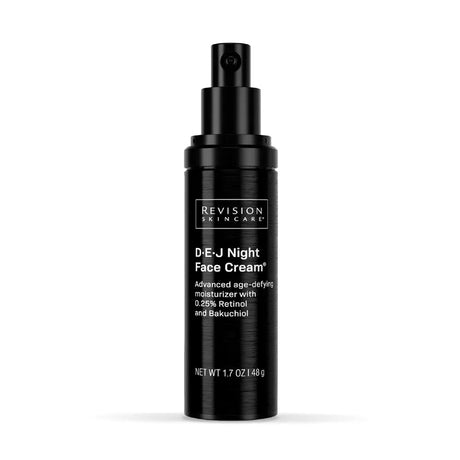
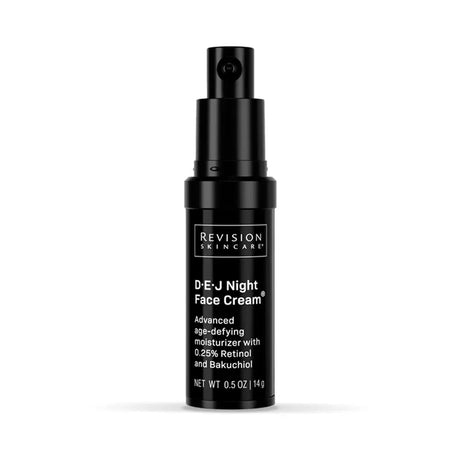
Revision Skincare D·E·J Night Face Cream uses microencapsulated, time-released 0.25% retinol with bakuchiol, peptides and barrier lipids, so it works as both a night moisturizer and a gentle retinoid. For experienced retinol users, Revision Skincare Retinol Complete 1.0 uses a time-released delivery system designed to make a higher strength more tolerable.
Not Every "Technology" Is a Delivery System
It is worth knowing the difference between a carrier and an active technology. Alastin's TriHex Technology is a good example. It is not a capsule or vesicle. It is a blend of peptides designed to help clear damaged collagen and elastin and support the skin's natural production of new, healthy collagen and elastin. The newest version adds proprietary Octapeptide-45.
You will find it in Alastin Restorative Skin Complex for daily firming and volume, and in Alastin Regenerating Skin Nectar, designed to prepare skin before a procedure and support it through recovery. Our guide to peptides for skin explains how signaling peptides like these work. You can browse every TriHex formula in the Alastin Skincare collection.
Delivery Systems at a Glance
| Technology | What It Does | Find It In |
|---|---|---|
| Liposome | Phospholipid sphere that protects an active and helps it blend into the skin barrier | Alastin C-Radical Defense, Alastin A-Luminate, Young Goose C.A.R.E. |
| Lipid encapsulation | Lipid shell that releases a retinoid slowly for less irritation | Alastin Renewal Retinol, Pavise Tensor Neck Lift |
| Biomimetic exosome | Engineered vesicle that carries retinal or peptides deeper into skin | Hydrinity RetaXome, Hydrinity Célthera |
| Exosomes as the active | Natural vesicles that carry repair signals to skin cells | Young Goose Vampire Exosomes |
| Tiered-Release Vesicles | High-capacity vesicles that release ingredients gradually | Ourself Lip Filler, Ourself Advanced Regenerative Serum |
| Delivery booster | Increases penetration of the actives paired with it | Pavise DiamondCore formulas |
| Time-release | Makes the active available gradually instead of all at once | Revision D·E·J Night Face Cream, Retinol Complete |
How to Use This When You Shop
- If retinoids have irritated you before, look for lipid-encapsulated, exosome-encapsulated or time-released versions before giving up on them.
- If you want vitamin C that lasts, a stabilized, encapsulated form will hold its potency better than a bare formula that turns orange in the bottle.
- If you are recovering from a treatment, focus on formulas built for repair signaling, like exosome serums and TriHex peptides, and save strong exfoliants for later.
- Do not judge by percentage alone. A well-delivered lower strength can outperform a higher strength that never gets where it needs to go.
Still deciding where to start? Our best anti-aging serums collection brings many of these technologies together in one place.
One Thing Worth Doing Before You Order
Advanced delivery technology is an investment, so make it go further. Email subscribers get access to VIP pricing on their orders, which means the savings apply to the products you are already planning to buy. Join VIP here before you check out. When a gift with purchase is available, you will find it listed on our gift with purchase page, and the offers displayed in your cart at checkout always take precedence.